
Burhuc AI Labs

Where Burhuc tests new AI ideas.

A working space for agents, automation, evaluation methods, trust layers, compliance research, and product prototypes. Some experiments stay internal; the strongest become public Burhuc products.

Experimental workspace · Built in Luxembourg · Product tracks marked by maturity and evidence

AI Lab projects

Current public tracks from the lab. Each card is product-specific; AI Labs itself remains broader than any one framework.

01 / Evaluate

CertentIQ

Tests a frozen agent-system configuration against a versioned suite. Results describe behaviour observed in that run and do not certify future behaviour, legal compliance, or production safety.

Runtime evaluation Proof of possession Signed evidence records
Open CertentIQ
02 / Develop

CertentiTrain

Converts observed failure patterns into controlled remediation candidates. TRAIN results are practice evidence; improvement remains specific to a protected re-evaluation of the frozen system, and broader generalisation is unproven.

Evidence-led remediation Protected re-evaluation System-specific findings
See how it works
03 / Mediate

CertentiWall

Represents the policy-mediated control boundary for protected agent effects: identity, tool calls, writable state, outbound network access, and short-lived secrets. Production effectiveness requires deployment-specific evidence.

Identity-bound actions Default-deny egress Action evidence
Review architecture

How the lab works

Burhuc Labs follows a simple loop: build, test, measure, improve, and decide. The strongest experiments become internal tools or public products.

A playground with discipline.

Fast experiments are allowed. Public claims are not. Each lab track must earn confidence through tests, evidence, deployment gates, and operational review.

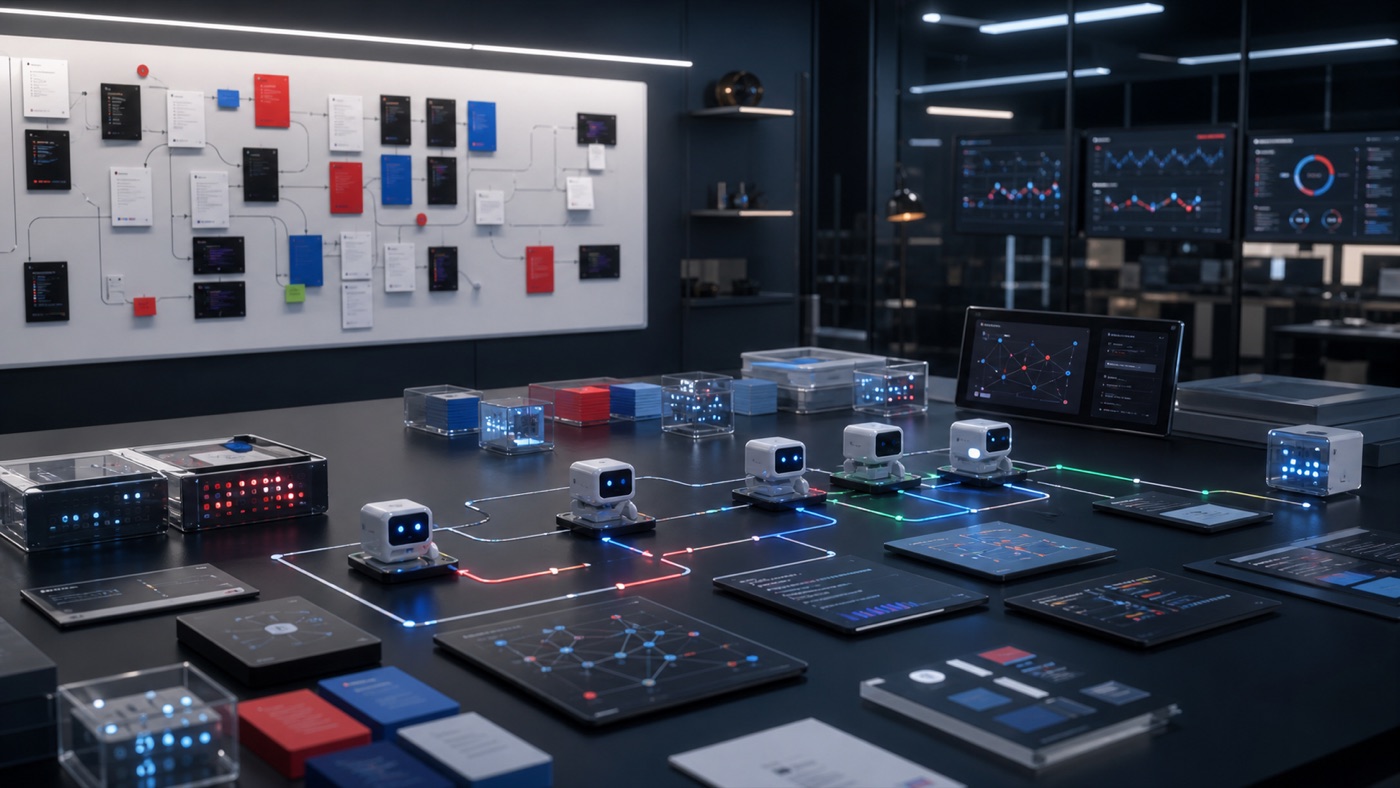
Controlled AI experimentation workflow with testing loops
1

Prototype AI-based products quickly

Explore agents, automation, research workflows, trust layers, and decision tooling.

2

Test them against practical use cases

Use realistic operations, runtime endpoints, deployment checks, and user-facing surfaces.

3

Measure reliability, risk, and usefulness

Evidence matters: logs, traces, runbooks, smoke checks, scores, and reviewable artifacts.

4

Keep what proves value

Failures are logged, weak ideas are removed, and selected projects move toward release.

Secure agent controls

Boundaries live outside the prompt.

Burhuc Labs uses AI-agent security work as product input: prompts can guide behaviour, but important limits need deterministic controls around the runtime, tools, files, credentials, and network.

01

Access control

Bind actions to user, tenant, role, and declared purpose before an agent can call tools or change state.

02

Execution limits

Restrict commands, package installs, repositories, writable paths, and tool calls outside model instructions.

03

Default-deny egress

Block outbound network access unless the destination is explicitly allowed, scoped, and logged.

04

Secrets outside the agent

Keep credentials out of the agent runtime and broker short-lived tokens only when the action requires them.

Technical source input: NVIDIA AI Red Team, Four Ways to Deploy More Secure AI Agents.

Evaluate. Develop. Verify again.

CertentIQ records observed behavioural weaknesses. CertentiTrain uses those observations to create controlled remediation candidates for protected re-evaluation.